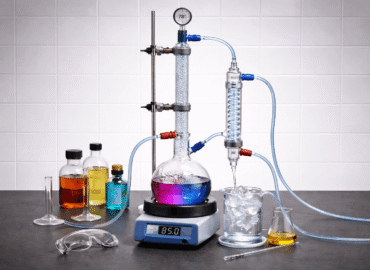
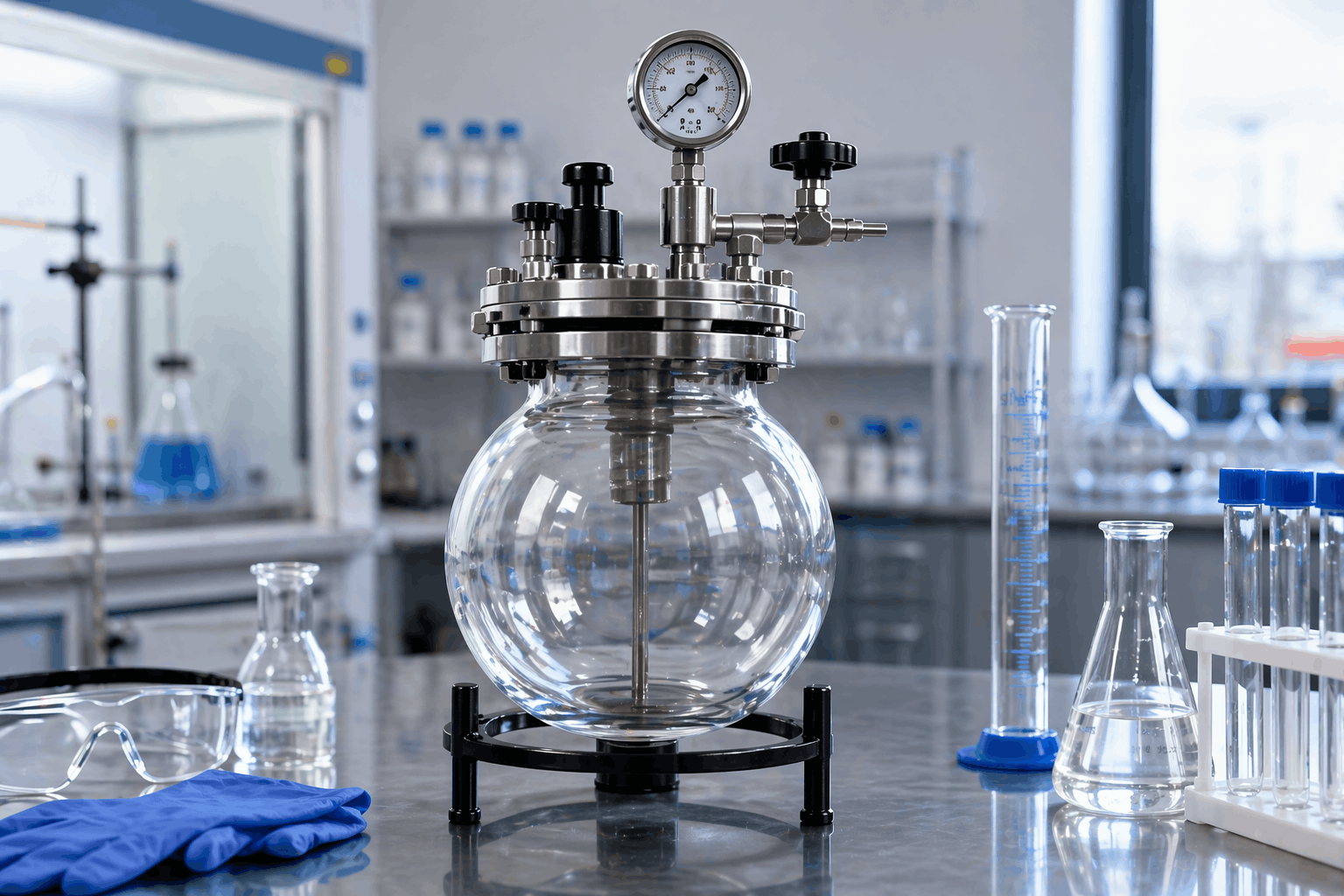
Pressure flasks serve as essential laboratory equipment for experiments that need pressure control, gas handling, and gas production. Laboratory workers face three main safety hazards when they handle pressure flasks, which include pressure flask breakage, chemical exposure, and explosion. Pressure flasks: safe laboratory practice
What Are Pressure Flasks?
Pressure flasks are specialized and specially crafted laboratory containers that can withstand internal pressure during chemical reactions. They are commonly used in gas generation, heating under pressure, or sealed reactions. The material used to make these flasks is usually thick and strong glass or other specially adapted materials that withstand stress.
Why Safety Matters in Pressure Flask Usage
Working under pressure increases the level of risk in any experiment. If the flask is overfilled or not sealed correctly, this can result in pressure buildup beyond the safe limits. Therefore, strict safety protocols prevent accidents and guarantee that experimental results are not compromised.
Essential Safety Guidelines
To use pressure flasks safely, you have to be careful.
- Pressure flasks can be really dangerous if you do not use them properly.
- So always check the pressure flask for any cracks or damage before you use it.
- You should never go over the recommended pressure or temperature limits when you are using a pressure flask.
- Use the kind of stoppers or seals that are made for pressure flasks and the conditions they are in.
- Do not make the temperature change really fast because that can make the pressure flask weak.
- When you are working with a pressure flasks, you should always wear things like gloves, goggles, and a lab coat.
- Do not fill up the pressure flask; leave some space for the pressure to get bigger.
- Make sure the room you are in has good air moving around so that gas does not build up.
- Remember, pressure flasks need to be used with care, so always follow these rules when you are using a pressure flask.
Proper Handling Techniques
Safe handling goes beyond preparation. During experiments, it is important to:
- Place the flask on a stable, heat-resistant surface
- Use clamps or stands to secure the flask when necessary
- Monitor pressure levels continuously if the equipment allows
- Open the flask slowly and carefully after the experiment
- Keep a safe distance when working with high-pressure reactions
Common Mistakes to Avoid
Many lab accidents occur due to simple errors. Be mindful to avoid:
- Using damaged or low-quality glassware
- Sealing the flask too tightly without pressure release options
- Ignoring manufacturer guidelines
- Heating the flask unevenly
- Handling the flask without proper training
Applications of Pressure Flasks in Laboratories
Pressure flasks are widely used in:
- Chemical synthesis involving gases
- Microbiology experiments requiring sealed environments
- Industrial research and testing
- Educational laboratory demonstrations
Conclusion
Safe usage of pressure flasks in any laboratory setting is not just a recommendation but a necessity. Proper guidelines have to be followed; using proper equipment and staying attentive during an experiment can lead to the safe conduction of experiments and successful results. Safety goes together with precision when working with pressure.
Enhance Your Lab Skills with Experts
Need to develop practical laboratory skills and safe practices under the guidance of experts? Join Srilekha Bio Enviro Tech. Build yourself a strong scientific career by acquiring practical laboratory experience and useful techniques from the experts at Srilekha Bio Enviro Tech. Sign up now and sharpen your laboratory skills!