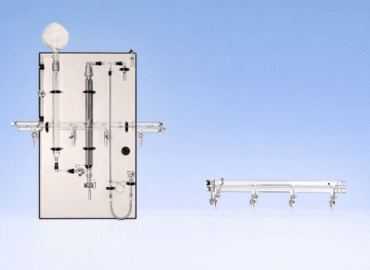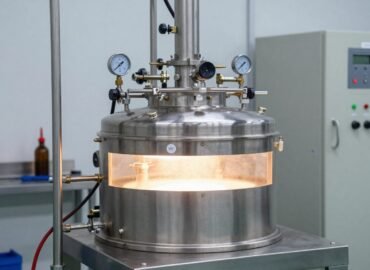
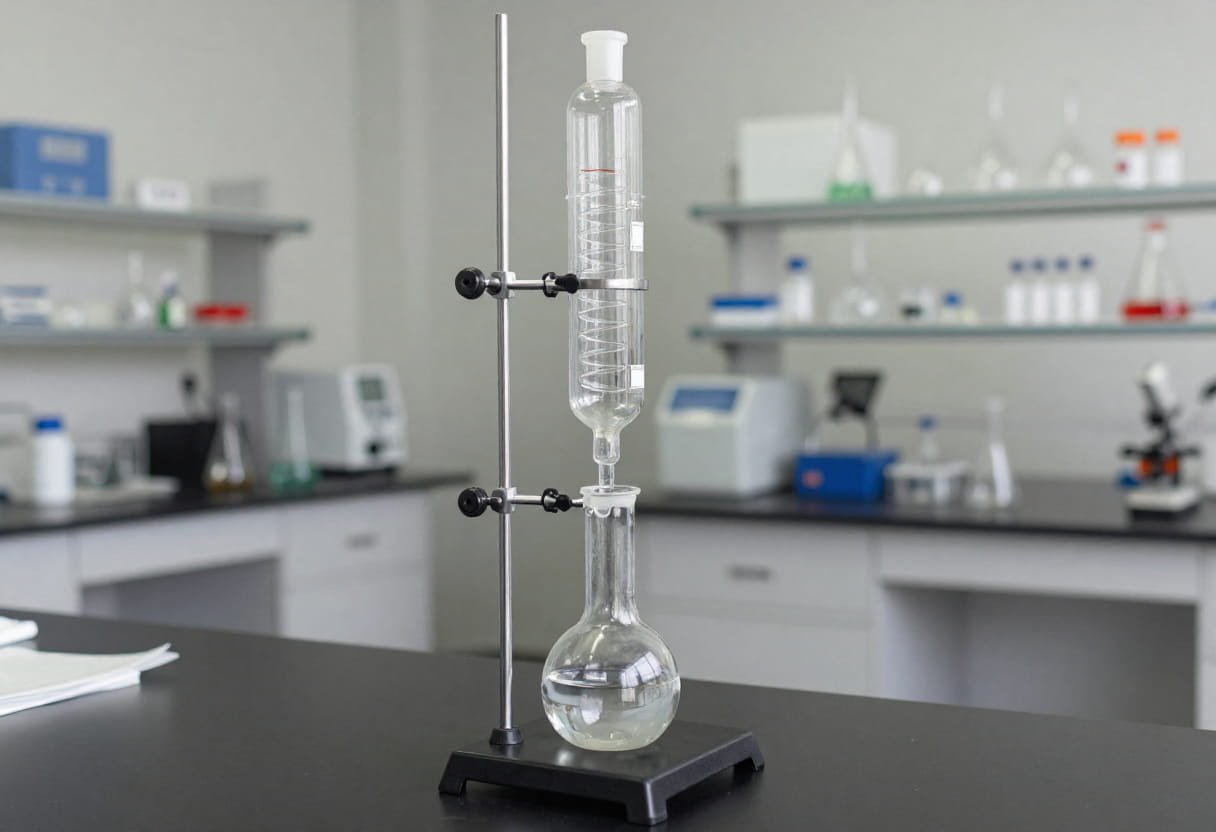
The fractional distillation apparatus is very common in laboratory use for the separation of liquid mixtures into individual components, depending on their boiling points. While simple distillation is applicable only when boiling points differ significantly, fractional distillation equipment is designed for mixtures in which boiling ranges are close. Hence, it’s one of the basic tools of chemical analytics, pharmaceutical research, and process development.
In lab settings, precise separation of substances has to happen to assure purity, reproducibility, and the absence of any hazards. This facilitates fractional distillation equipment because it allows multiple cycles of vaporization and condensation to happen.
Understanding Fractional Distillation Equipment
The fractional distillation apparatus works on the principle of liquid-vapour-phase equilibrium. Upon heat application, a mixture will have its lower-boiling-point components vaporize first. Such vapors rise in the fractionating column, where the processes of condensation and re-vaporization take place before reaching the condenser.
The repeated interaction between vapour and liquid increases separation efficiency, allowing the apparatus to separate components in a purified form. Because accuracy is crucial, laboratories highly value the apparatus used in fractional distillation.
Key Components of Fractional Distillation
The basic setup of the process of fractional distillation consists of several different elements that strive for a common objective:
- Distillation flask: This contains the mixture, and it can be heated uniformly.
- Fractionating Column: This provides a surface area necessary for many vapour-liquid encounters.
- Thermometer or temperature probe: This is used to monitor the boiling points of the substance
- Condenser: Changes vapour back into the liquid state
- Receiving Vessels: Safe collection of separated fractions
The efficiency of a fractional distillation column directly depends on the efficiency of the fractional distillation apparatus, as well as the parameters of the column, including height and packing materials.
Why Fractional Distillation Is Important in Labs
Laboratory procedures may include handling sensitive chemicals, which may be affected by trace impurities. The use of equipment in fractional distillation aids in ensuring reliability in such situations.
It can be considered important from several aspects:
- Improves the separation of closely boiling compounds
- Improves product purities and analytical accuracy
- Reduction in material loss during separation
- Supports controlled experimentation and scale-up studies
The functional advantages enumerated above keep fractional distillation equipment a part of the core laboratory infrastructure despite advances in more or other separation techniques.
Common Laboratory Applications
Apparatus used in fractional distillation finds applications in diverse fields of research, such as:
- Pharmaceutical & API Development
- Fine & speciality chemical synthesis
- Solvent Purification and Recovery
- Academic and teaching laboratories
- Pilot-scale process evaluation
In all of these applications, researchers aim to achieve a reproducible and efficient separation process in controlled environments.
Design Considerations for Modern Equipment
Modern laboratory systems prioritize safety, flexibility, and precision. They integrate features such as jacketed reactors, vacuum compatibility, and chemical resistance to meet specific scientific requirements. Temperature, pressure, and compatibility of chemicals define the requirements needed in choosing a fractional distillation apparatus.
Conclusion
The knowledge about how the fractional distillation apparatus functions is beneficial to researchers and engineers to be able to make informed decisions about process designs. The resources and documentation on technical specifications or an application based on laboratory distillation systems can be availed from Srilekha Bio Envirotech.