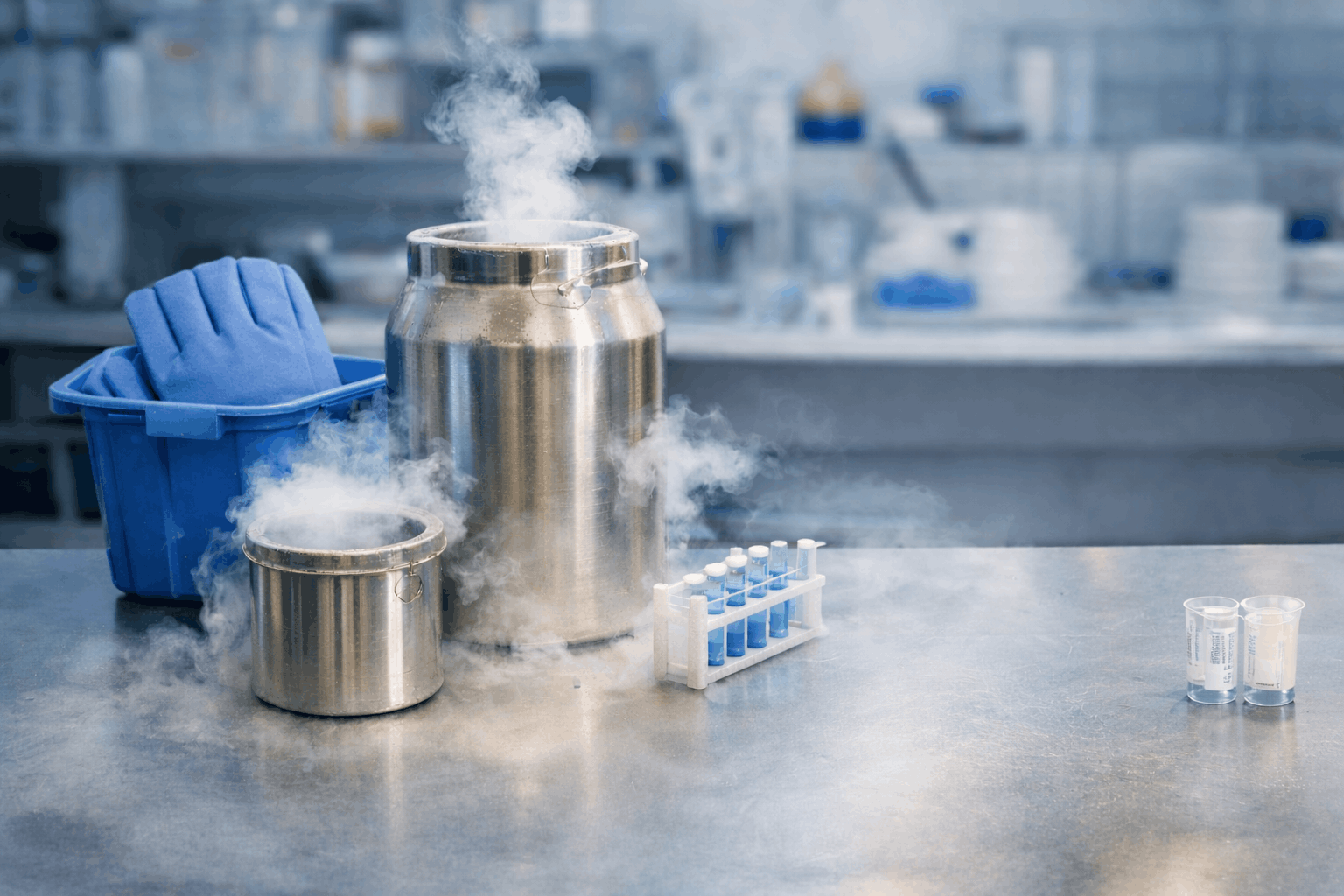
There are numerous instances of science laboratories that require extremely low temperatures to store and handle scientific products, either in liquid nitrogen or other cryogenic liquids. Among the most utilized appliances towards the end is the Dewar flask, a rather unique construction that is designed to reduce the heat-conductivity and to make the liquids of the solutions as cold as possible. Although the dewar flasks are very convenient with respect to scientific study and research, it is also dangerous when mishandled. The cryogenic liquids may produce serious cold burns, pressure, and even explosions if the safety regulations are not followed. Considering these dangerse adequate safety precautions in the use of Dewar flasks must be studied and followed. Laboratory procedures and precautions will assist scientists and students to be safe when using such special containers to guarantee effective work.
The Dewar Flasks should be used with precautions.
Put on the Right Protection, Tyron.
Wear appropriate personal protective equipment (PPE), including safety goggles, work gloves, and a laboratory coat that is insulated. Cryogenic liquids may lead to frostbite and blindness when in contact, and thus, protection equipment is required.
Handle the Flask Carefully
Dewar flasks are made of narrow metal or glass, and glass is a brittle material. There should be no difficulty in transporting them so as to create cracks and breakages that may lead to unsafe spillage of cryogenic liquids.
Do Not Seal the Flask Tightly
The dewar flasks should never be wholly covered. Liquid kept at low temperatures does not lose its evaporation and form gas. Where the container is highly closed, it could be pressurized accordingly, thus resulting in the explosion.
Ensure Proper Ventilation
The cryogenic liquids evaporated also discharge the gases that may cause the oxygen available in the room to be dispersed. In any case, emptying of Dewar flasks is supposed to take place in well-ventilated places so as to avoid the chances of oxygen depletion.
Transfer Appropriate Equipment.
Pouring or transfer of cryogenic liquids must be done with the required equipment, e.g., low-temperature transfer tubes/ funnels. This decreases accidents and spillages.
Individual contact with Cryogenic Liquids.
The cryogenic liquids should not be in direct contact with the skin. Even in the short exposure, severe cold burns and tissue damage can be experienced.
Wipe the Dewar Flask and then put it into use.
Check the flask prior to use for cracks, dents, and other damage. In the event that a Dewar flask is broken, it can be under pressure or undergo a temperature change, which can lead to accidents.
Store the Flask Properly
Dewar flasks should neither be placed in edges nor on the flat but on the edges. It is placed in a sufficient way to avoid any accidental spillages and tipping.
Successful Training and Management.
The dewar flask and the cryogenic materials should be used with trained personnel or under the supervision of students. When it comes to being familiar with the equipment and procedures, the chances of a mistake are minimized.
Conclusion
It is also required in the very low temperatures of the laboratories in dewar flasks. However, there are some risks when they are used due to the nature of the cryogenic liquids and the pressures. To a considerable degree, the dangers can be mitigated by the researchers of the laboratory following several precautionary measures, such as the implementation of protective clothing, sufficient ventilation, tight seals, and the examination of the flask.
The safety of handling is not only effective in preventing people from injuries, but it also makes experiments non-disastrous and productive. The greatest part of the safe working environment is the use of Dewar flasks, since it is all about being aware and training and responsible in the laboratory.